
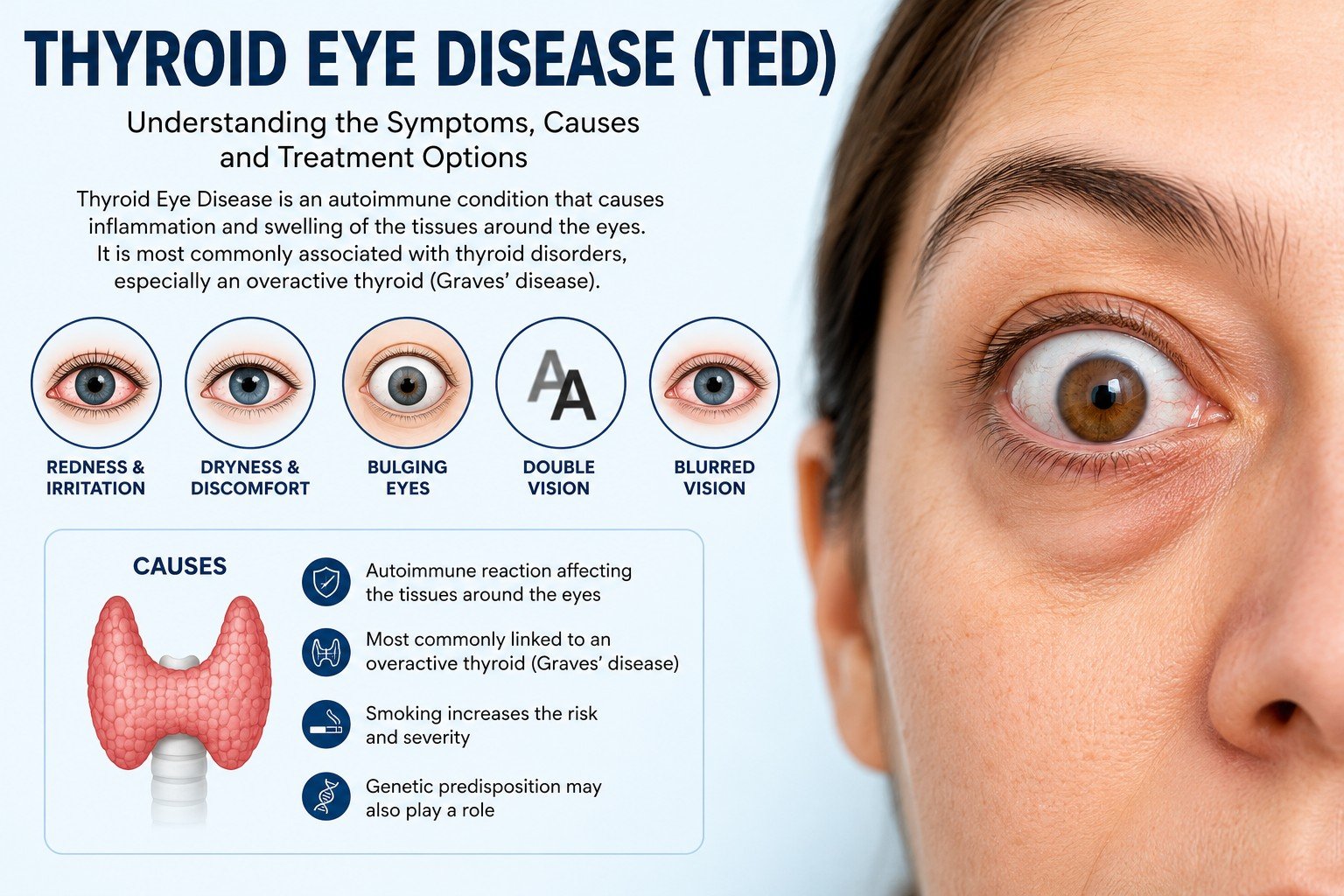
Thyroid Eye Disease (TED) is an autoimmune condition that causes inflammation and swelling of the muscles and soft tissues around the eyes. As the tissues inside the eye socket become swollen, the eyeball may be pushed forward, leading to a variety of eye-related symptoms and vision problems.
Treatment focuses on protecting the eyes and controlling inflammation while the disease runs its course. Depending on the severity, management may include lubricating eye drops, medications, lifestyle changes, or surgery. Since TED is commonly associated with thyroid gland dysfunction, especially an overactive thyroid, underlying thyroid disease also requires proper medical treatment.
TED is also known by several other names, including:
- Graves’ ophthalmopathy
- Thyroid ophthalmopathy
- Dysthyroid eye disease
- Ophthalmic Graves’ disease
Who Is at Risk of Thyroid Eye Disease?
Thyroid Eye Disease is relatively rare, affecting approximately 16 women and 3 men per 100,000 people each year. It most commonly occurs in middle-aged adults and is frequently linked to autoimmune thyroid disorders such as Graves’ disease.
Certain factors increase the risk of developing TED, including:
- Overactive thyroid gland (hyperthyroidism)
- Family history or genetic predisposition
- Smoking, which significantly worsens the disease
- Autoimmune conditions
Smoking is one of the strongest risk factors and can make the condition more severe and harder to treat.
Common Symptoms of Thyroid Eye Disease
Symptoms occur due to swelling and inflammation around the eyes. Common signs include:
- Redness and irritation of the eyes
- Dryness, watering, or discomfort
- Eye pain or pressure sensation
- Bulging eyes (proptosis), creating a “staring” appearance
- Puffy eyelids and swelling around the eyes
- Double vision (diplopia)
- Difficulty moving the eyes normally
- Blurred vision in advanced stages
- Reduced color vision or faded colors
In some cases, one eye may be more affected than the other. Patients may also experience symptoms related to thyroid dysfunction such as weight changes, palpitations, anxiety, or fatigue.
How Is Thyroid Eye Disease Diagnosed?
An ophthalmologist can often diagnose TED through a detailed eye examination, especially if there is a known thyroid disorder. Typical findings include bulging eyes, eyelid retraction, restricted eye movements, and eye congestion.
Blood Tests
Blood tests help evaluate thyroid function and measure thyroid hormone levels through:
- Thyroid Function Tests (TFTs)
- Thyroid antibody testing
Imaging Scans
In certain cases, imaging may be required:
- MRI scan of the orbit to assess swelling of eye muscles and tissues
- Thyroid scans to evaluate thyroid gland activity
Vision Testing
Additional tests may include:
- Color vision testing
- Peripheral vision assessment
- Eye movement evaluation
Regular follow-up examinations are important to monitor disease progression.
Treatment for Thyroid Eye Disease
TED is often a self-limiting condition, meaning the active inflammation may gradually settle over months or years. However, some changes such as bulging eyes or double vision may persist.
The main goals of treatment are:
- Reduce inflammation
- Protect the eyes and vision
- Improve comfort and appearance
- Treat underlying thyroid disease
Common Treatment Options
Lubricating Eye Drops
Artificial tears and lubricants help relieve dryness and irritation.
Medications
Steroids or other anti-inflammatory medicines may be used in moderate to severe cases.
Surgery
Some patients may require surgery for:
- Eye muscle correction
- Eyelid repositioning
- Orbital decompression surgery
Treatment is usually coordinated between an ophthalmologist and an endocrinologist.
Self-Care Tips for Thyroid Eye Disease
Patients can help manage symptoms with simple lifestyle measures:
- Stop smoking immediately
- Sleep with the head elevated to reduce swelling
- Use lubricating eye drops regularly
- Wear sunglasses for light sensitivity
- Avoid driving if experiencing double vision
Possible Complications of TED
Although many patients recover without permanent damage, severe or untreated TED can lead to complications such as:
- Corneal damage from exposure
- Permanent double vision or squint
- Optic nerve damage
- Reduced vision or color perception
- Cosmetic concerns related to eye appearance
The risk of complications is higher in smokers, older adults, and people with diabetes.
Prognosis of Thyroid Eye Disease
Thyroid Eye Disease can be a long-term condition, with the active inflammatory phase typically lasting between 6 months and 2 years. Most cases are mild and manageable with regular monitoring and supportive treatment.
Early diagnosis and timely treatment significantly improve outcomes. However, severe cases may lead to permanent visual impairment if left untreated.