
As parents, we focus on every aspect of our children’s growth—from nutrition and education to physical activity and emotional well-being. One crucial area that is often overlooked, however, is vision. Clear eyesight plays a foundational role in a child’s learning, coordination, behaviour, and overall development, especially during the early years.
In Dubai, where children are exposed to digital screens and structured learning from a young age, regular paediatric vision screening is more important than ever.
Recent global studies estimate that myopia (short-sightedness) will affect more than 50% of the world’s population by 2050. Children who develop myopia early are more likely to progress to higher degrees, increasing the risk of long-term eye complications later in life. Early detection through routine eye examinations allows timely treatment and better visual outcomes.
Why Are Eye Exams Important for Children?
Unlike adults, children may not realise that their vision is poor. Many assume that everyone sees the way they do. Conditions such as near-sightedness, long-sightedness, astigmatism, or lazy eye often develop silently, without obvious symptoms.
Undiagnosed vision problems can lead to:
- Difficulty with reading and learning
- Poor concentration in school
- Headaches or eye strain
- Reduced confidence and participation in activities
Regular eye exams help identify these issues early, ensuring children receive the support they need to thrive academically and socially.
Common Eye Conditions in Children
Some of the most frequently diagnosed paediatric eye conditions include:
- Refractive errors: Myopia, hypermetropia, and astigmatism
- Strabismus (squint): Misalignment of the eyes, affecting depth perception
- Amblyopia (lazy eye): Reduced vision in one eye due to poor visual development
- Eye allergies and infections: Common in younger children, causing redness, itching, or discharge
Early diagnosis significantly improves treatment success.
When Should Children Have Their Eyes Checked?
Children should ideally have:
- Their first comprehensive eye exam at around 6 months
- A second exam at 3 years of age
- Another exam before starting school
After this, eye examinations every 1–2 years are recommended, or more frequently if a child wears glasses, has an existing eye condition, or a strong family history of eye problems.
Parents should seek an eye examination if their child squints, tilts their head, sits very close to screens, struggles with reading, complains of headaches, or rubs their eyes frequently.
What Happens During a Children’s Eye Examination?
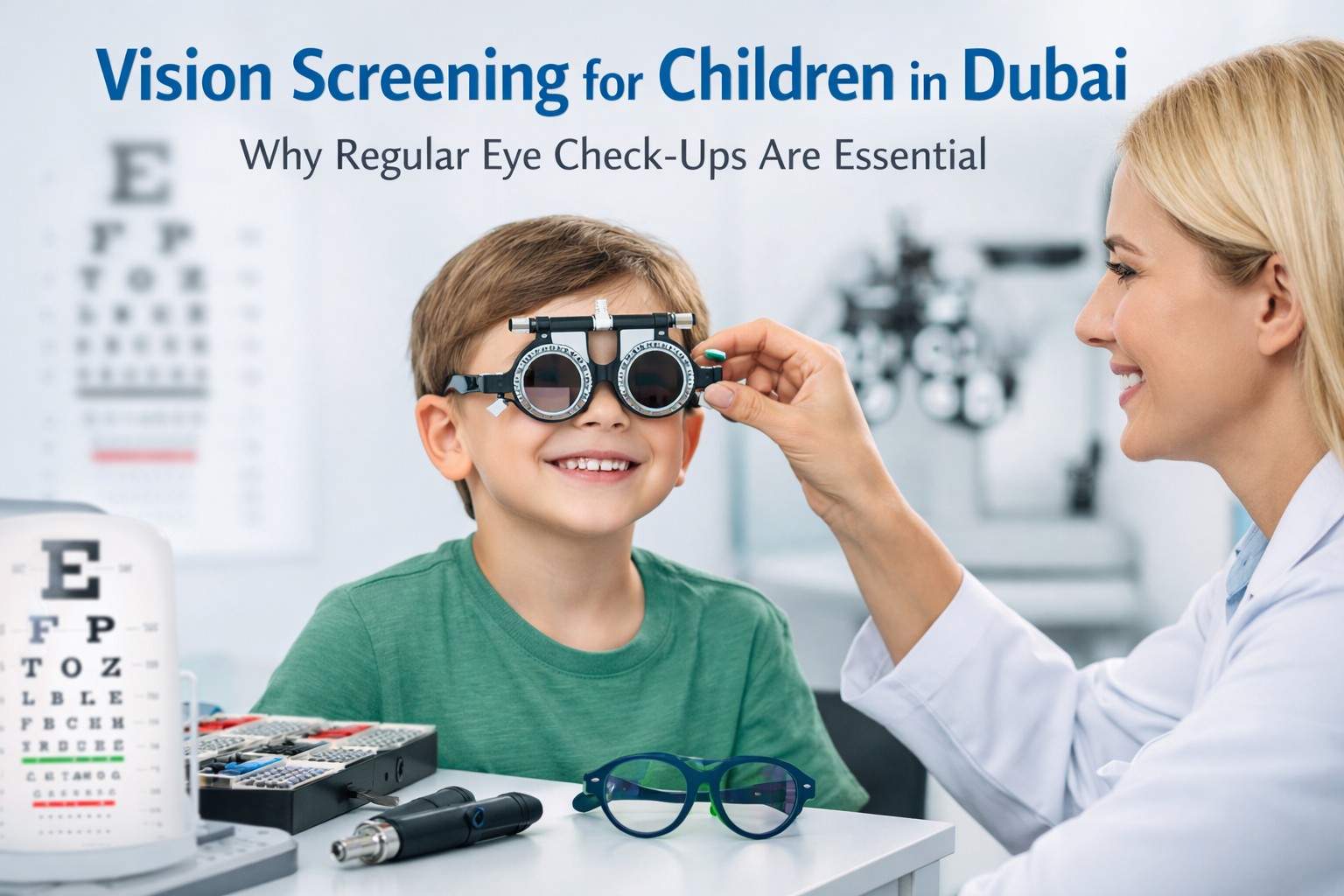
A paediatric eye exam is designed to be comfortable and child-friendly. It includes age-appropriate vision testing, assessment of eye alignment and movement, and a detailed evaluation of the eye’s internal health. Advanced diagnostic tools may be used when necessary to ensure accurate results.
Final Thoughts
Healthy vision is essential for a child’s success—both in and out of the classroom. In a visually demanding environment like Dubai, regular eye check-ups with an experienced ophthalmologist are one of the best investments you can make in your child’s future.
If you notice any signs of visual difficulty, or if your child has not had a recent eye exam, early evaluation can prevent long-term complications and support healthy visual development.