

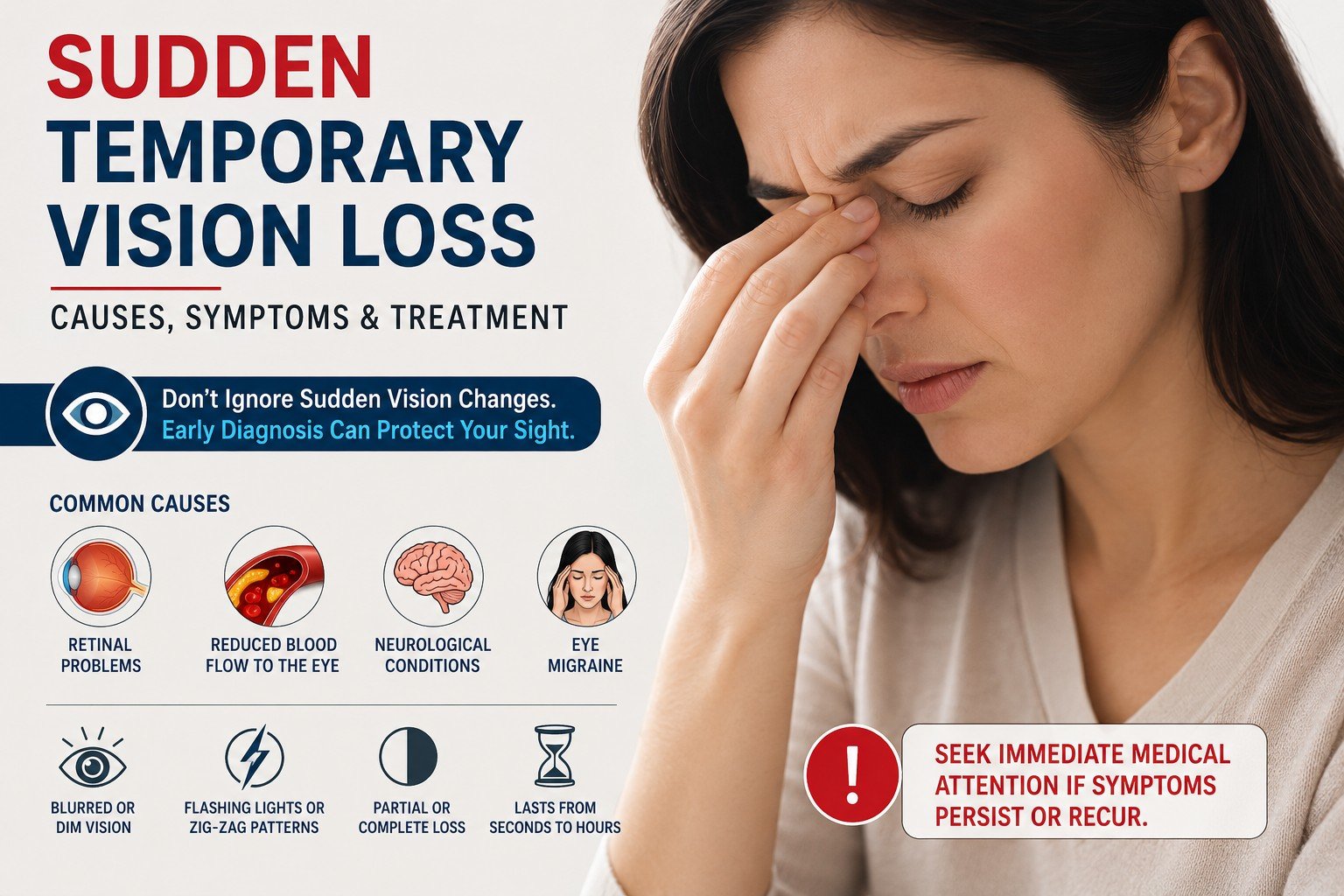
Sudden temporary vision loss can be frightening. One moment your vision is clear, and the next it becomes blurry, dark, dim, or completely absent for a few seconds or minutes. While some causes are harmless, others may signal a serious medical emergency involving the eyes, brain, or blood circulation.
Understanding the causes, symptoms, and treatment options can help protect both your vision and overall health.
What Is Sudden Temporary Vision Loss?
Temporary vision loss refers to a sudden decrease or complete loss of vision that later returns to normal. It may affect one eye or both eyes and can last from a few seconds to several hours.
Some people describe it as:
- A black curtain coming over the eye
- Blurry or foggy vision
- Tunnel vision
- Flashing lights or zig-zag patterns
- Partial loss of sight
Even if vision returns quickly, the episode should never be ignored.
Common Causes of Temporary Vision Loss
1. Eye Migraine (Ocular Migraine)
Migraines can sometimes affect vision without causing severe headache. Patients may notice flashing lights, blind spots, or shimmering patterns lasting 20–30 minutes.
2. Reduced Blood Flow to the Eye
A temporary blockage of blood supply to the retina can cause sudden loss of vision in one eye. This condition, called amaurosis fugax, may be a warning sign of stroke.
3. Retinal Problems
Conditions such as retinal detachment, retinal tears, or retinal vascular occlusion may cause sudden flashes, floaters, or shadow-like vision loss.
4. Dry Eyes or Corneal Problems
Severe dryness, corneal swelling, or eye surface disorders can occasionally cause intermittent blurred vision.
5. Low Blood Pressure or Poor Circulation
Suddenly standing up, dehydration, anemia, or cardiovascular disease can reduce blood flow to the eyes and brain, leading to temporary dimming of vision.
6. Neurological Conditions
Certain brain-related conditions, including transient ischemic attacks (TIA), multiple sclerosis, or seizures, may affect vision temporarily.
Symptoms That Require Immediate Medical Attention
Seek urgent evaluation if temporary vision loss occurs with:
- Weakness or numbness
- Difficulty speaking
- Severe headache
- Eye pain
- New floaters or flashing lights
- A curtain or shadow over vision
- Dizziness or imbalance
- Loss of vision in one eye
These symptoms could indicate a stroke, retinal detachment, or other sight-threatening conditions.
How Is Temporary Vision Loss Diagnosed?
An eye specialist may perform:
- Vision and eye pressure testing
- Dilated retinal examination
- Optical coherence tomography (OCT)
- Retinal scans or angiography
- Blood pressure and blood sugar checks
- Carotid artery or heart evaluation if circulation problems are suspected
Early diagnosis is essential to prevent permanent vision loss.
Treatment for Sudden Temporary Vision Loss
Treatment depends on the underlying cause.
Options may include:
- Migraine management
- Lubricating eye drops for dry eyes
- Laser or retinal treatment
- Blood pressure or cholesterol control
- Blood-thinning medication
- Management of diabetes or vascular disease
In serious cases, urgent medical or surgical treatment may be required.
Can Temporary Vision Loss Be Prevented?
You can reduce your risk by:
- Controlling diabetes and blood pressure
- Avoiding smoking
- Staying hydrated
- Having regular eye examinations
- Seeking immediate care for sudden visual changes
Final Thoughts
Sudden temporary vision loss in adults should never be dismissed as “just eye strain.” While some causes are temporary and harmless, others may be early warning signs of stroke, retinal disease, or serious neurological problems.
If you experience sudden vision changes, prompt evaluation by an eye specialist can help protect your sight and overall health.