

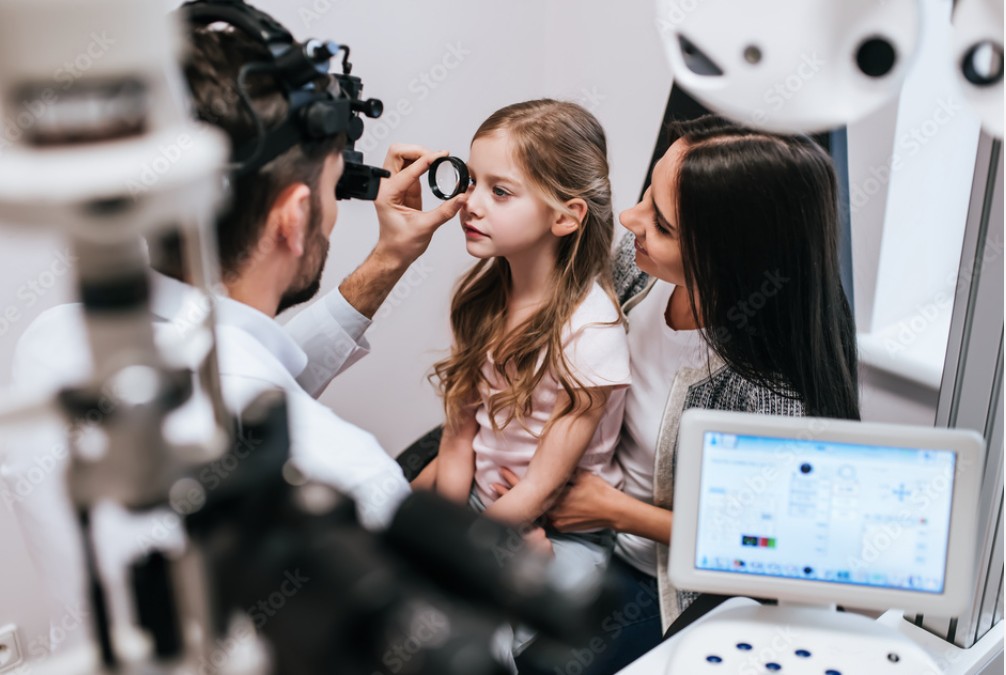
Hey parents — if your child is starting to get nearsighted (myopia), great news: we’re no longer just prescribing glasses and hoping for the best. In recent years, ophthalmology has made major strides in myopia control — meaning we can now slow down (and sometimes significantly reduce) how much worse nearsightedness gets over time. Here’s a friendly, up-to-date breakdown of what’s new and working.
What’s changed — and why it matters
For a long time, “myopia = glasses for life” was the standard. But we now know that the elongation of the eyeball (not just the lens prescription) drives worsening myopia — and many modern treatments aim to slow or stop that elongation.
Slowing myopia matters not just for seeing clearly now, but for reducing long-term risks: high myopia later in life is associated with serious eye problems (retina issues, risk of detachment, etc.). So early intervention can make a big difference.
The Current “Heavy-Hitter” Treatment Options
• Optical Solutions: Lenses & Nightwear
- Orthokeratology (Ortho-K) — Special rigid contact lenses worn overnight gently reshape the cornea so kids see clearly during the day, and at the same time slow axial (eyeball) elongation. Studies show roughly a 40–50% reduction in myopia progression compared with doing nothing.
- Specialized myopia-control spectacle or contact lenses — These aren’t regular glasses. Designs such as peripheral-defocus lenses (with segments or aspherical lenslets) alter how light enters the eye, which seems to send “slow growth” signals. For example, lenses using technologies like DIMS or HAL have shown around 50–60% slowing in progression/eye-growth.
- Day-wear soft contact lenses (multifocal or “myopia control” lenses) — For older kids or teens comfortable with contacts, these can be a good option. They work similarly by controlling peripheral defocus.
👍 Best for: kids who dislike traditional glasses or are active in sports, or when parents/clinician want to leverage optical defocus strategies.
• Pharmacological Treatment: Low-Dose Eye Drops
- Low‑dose atropine eye drops — This has become widely accepted. When used daily (usually at bedtime), it can slow myopia progression by ≈ 30-60%.
- Newer research suggests 0.05% atropine may offer a better balance of “slowing effect vs side-effects” than the older 0.01%.
👍 Best for: children who are too young or uncomfortable for lenses, or as part of a combined therapy plan.
⚠️ What to monitor: mild light sensitivity or difficulty with near vision can occur — but at low doses, side-effects are generally minimal. PubMed+1
• New-Age Option: Light Therapy
- Repeated Low‑Level Red‑Light (RLRL) Therapy — This is a rising non-invasive approach where the child receives brief daily sessions of gentle red light (usually around 650 nm). Early data show it can significantly slow axial elongation. PentaVision+2Myopia Profile+2
- Often combined with other treatments (like Ortho-K) to enhance effect. Myopia Profile+1
👍 Best for: kids who struggle with lenses or drops, or families open to newer technologies — though long-term data are still accumulating. Myopia Profile+1
Why Combined Therapy Is Getting Attention
Recent studies show that using two different methods together — say, Ortho-K + low-dose atropine — can work better than either alone. A 2025 clinical trial found this combo especially effective in reducing axial elongation without serious side effects. Nature+1
The idea is to target eye-growth mechanisms from different angles (optical + biochemical), giving kids the best shot at slower progression — especially if their myopia was advancing quickly.
Lifestyle & Environmental Habits Still Matter
Even with high-tech interventions, “old-school” habits still make a difference:
- More outdoor time — Natural light exposure (around 60–80 minutes per day) remains one of the most effective non-medical ways to slow onset and progression of myopia. Ophthalmology Times+1
- Reduce prolonged near-work / screen time — Encourage breaks, good reading distance, and regular “look far away” moments (breaks every 20–30 min).
These habits are best paired with medical/optical interventions for maximum long-term benefit.
What Parents Should Do — Steps to Take Now
- Ask your eye-care provider about early screening — catching myopia early gives more room to control progression before eyeball elongation accelerates.
- Talk about myopia-control lenses (Ortho-K, defocus glasses, multifocal contacts) or low-dose atropine drops, depending on your child’s age, lifestyle, tolerance, and prescription stability.
- Consider combination therapy if myopia is progressing quickly — many clinicians now recommend this for better results.
- Reinforce outdoor time and good visual hygiene — screen breaks, proper lighting, correct reading distance.
- Keep realistic expectations — most treatments slow progression rather than “fix” myopia forever. Regular eye-checks remain essential.
Final Thoughts (with a dash of optimism)
Think of myopia control like a team effort. It’s rarely one silver bullet — more often, a smart combo of science + habits + care. And the good news? With today’s options, we can shift from “myopia will always get worse” to “let’s slow it down — and give eyes a fighting chance.”