
GLP-1 receptor agonists have transformed the treatment of obesity and type 2 diabetes. Medications such as semaglutide and tirzepatide are helping millions achieve significant weight loss while improving blood sugar control and reducing cardiovascular risk. However, while these medications offer remarkable health benefits, they have also highlighted the importance of regular eye examinations, especially for people with diabetes.
If you are taking GLP-1 medications, scheduling an eye check-up with an experienced ophthalmologist in Dubai is an essential part of your healthcare journey.
How Do GLP-1 Medications Affect the Eyes?
GLP-1 medications do not directly damage the eyes. However, they can lead to rapid improvements in blood sugar levels. In some individuals with pre-existing diabetic eye disease, this sudden change may temporarily worsen diabetic retinopathy, particularly during the initial months of treatment.
Research suggests that patients with advanced diabetic retinopathy are at a higher risk of experiencing progression if blood glucose levels improve too quickly. This does not mean the medication should be stopped, but rather that careful ophthalmic monitoring is essential.
Some patients may also experience temporary blurred vision due to changes in the eye’s focusing power as blood sugar levels stabilize.
Who Should Be Most Careful?
Eye screening is particularly important if you:
- Have diabetes, especially for many years
- Have been diagnosed with diabetic retinopathy
- Are starting GLP-1 medications like semaglutide or tirzepatide
- Have poorly controlled blood sugar that is expected to improve rapidly
- Notice blurred vision, floaters, flashes of light, or sudden vision loss
Prompt evaluation can help detect changes before permanent vision damage occurs.
Why Regular Eye Screening Matters
Many eye diseases develop silently without causing noticeable symptoms in the early stages. A comprehensive eye examination allows your ophthalmologist to detect problems before they affect vision.
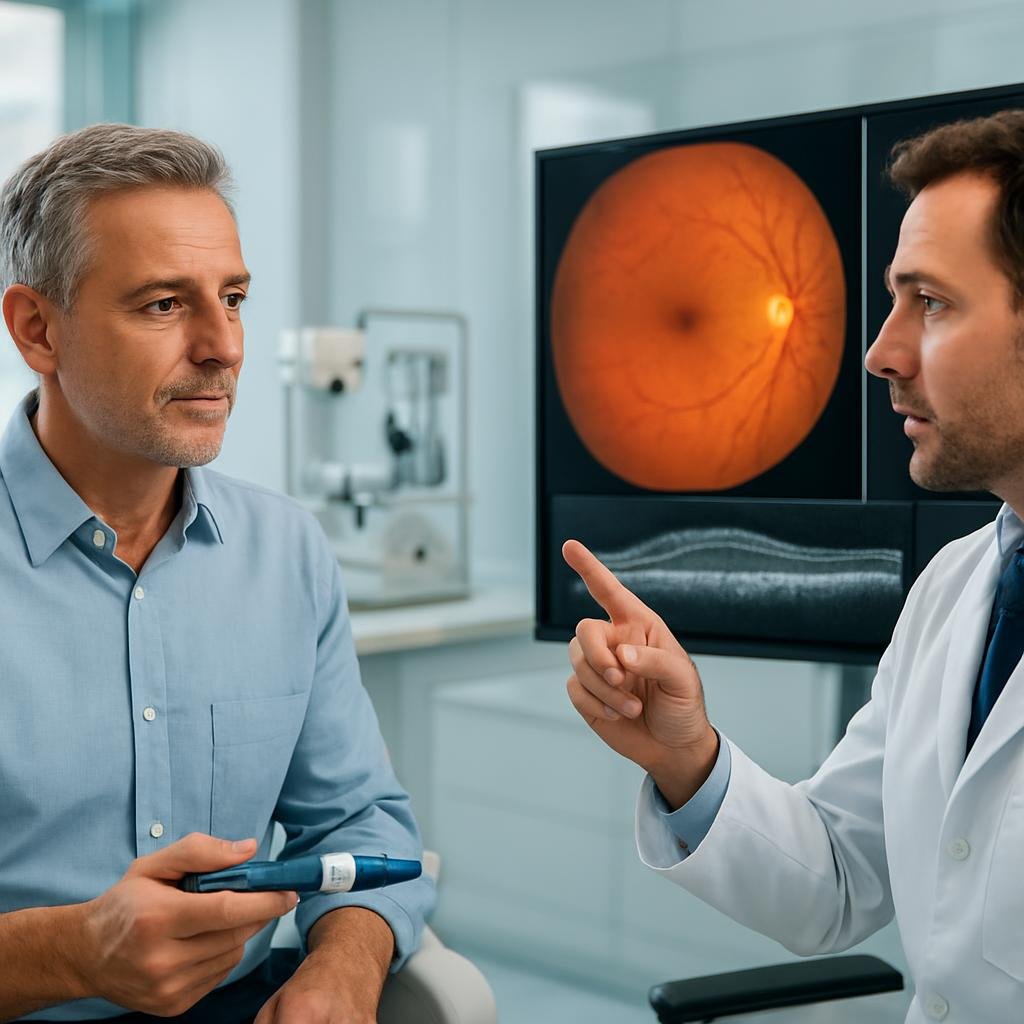
For patients taking GLP-1 medications, a complete eye examination may include:
- Visual acuity assessment
- Dilated retinal examination
- Digital retinal photography
- Optical Coherence Tomography (OCT) to detect diabetic macular edema
- Intraocular pressure measurement
- Assessment of the optic nerve and retina
These investigations help identify early retinal changes and guide timely treatment if required.
Protecting Your Vision While Taking GLP-1 Medications
The goal is not to avoid GLP-1 therapy but to use it safely alongside appropriate eye care.
Here are some practical tips:
- Have a comprehensive eye examination before or soon after starting treatment.
- Keep your blood sugar, blood pressure, and cholesterol well controlled.
- Attend all scheduled follow-up eye appointments.
- Report any sudden changes in vision immediately.
- Continue your diabetes medications unless advised otherwise by your physician.
Early detection remains the most effective way to prevent vision loss from diabetic eye disease.
Expert Eye Care in Dubai
If you are taking GLP-1 medications for diabetes or weight loss, regular eye screening should be part of your long-term health plan. At our clinic, we provide comprehensive retinal evaluation using advanced diagnostic technology to detect diabetic eye disease at its earliest stage.
Whether you are beginning treatment or have been using GLP-1 medications for some time, periodic eye examinations can help preserve your vision while you enjoy the benefits of improved metabolic health.
Book your comprehensive eye examination with Dr. Mamta Mittal, an experienced ophthalmologist in Dubai, to ensure your eyes remain as healthy as the rest of your body.