

Have you ever noticed tiny black dots, cobwebs, or thread-like shadows drifting across your vision? These are called visual floaters, and they’re a very common reason patients visit an eye clinic in Dubai. While most floaters are harmless, sometimes they can signal something more serious.
Let’s break it down in simple terms.
What Are Eye Floaters?
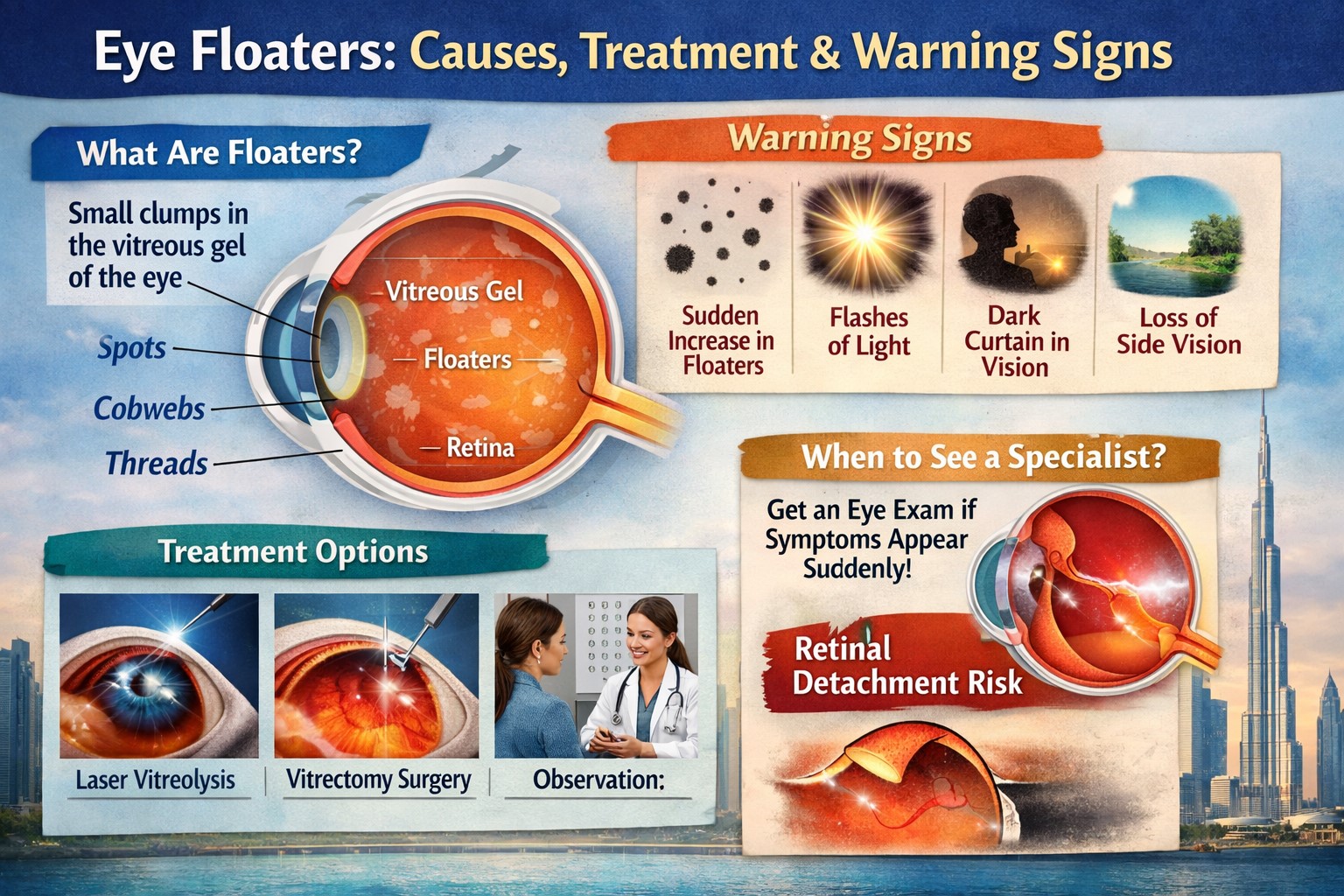
Floaters are small clumps of gel or cells inside the vitreous — the clear, jelly-like substance that fills the inside of your eye. As light enters the eye, these clumps cast shadows on the retina, and you see them as moving spots.
They often look like:
- Tiny black or grey dots
- Spider-web shapes
- Thread-like strands
- Transparent bubbles
They are especially noticeable when looking at a bright background like a clear Dubai sky or a white wall.
Why Do Floaters Happen?
The most common cause is age-related changes inside the eye. Over time, the vitreous gel shrinks and becomes more liquid. This natural process is called posterior vitreous detachment (PVD).
Other causes include:
- High myopia (common in younger adults)
- Diabetes
- Previous eye surgery (like cataract surgery)
- Eye inflammation (uveitis)
- Eye injury
- Retinal tear or detachment (less common but serious)
Most floaters are part of normal aging and are not dangerous. However, sudden changes should never be ignored.
Are Floaters Dangerous?
In most cases, no. The brain gradually adapts and learns to ignore them.
But here’s the important part:
If floaters appear suddenly and are accompanied by flashes of light or a curtain-like shadow in your side vision, this could indicate a retinal tear or retinal detachment — a sight-threatening emergency.
Immediate evaluation by an experienced eye specialist in Dubai is essential in such cases.
Warning Signs – Seek Urgent Eye Check If You Notice:
- Sudden increase in floaters
- Flashes of light (like lightning streaks)
- A dark shadow or curtain in vision
- Blurred or distorted vision
- Loss of peripheral (side) vision
These symptoms require urgent retinal examination.
How Are Floaters Treated?
1. Observation (Most Common Approach)
If floaters are mild and not affecting vision significantly, no treatment is needed. The brain often adapts within weeks to months.
2. Laser Vitreolysis
In selected cases, a specialized laser can break large floaters into smaller pieces. This is suitable only for specific types of floaters.
3. Vitrectomy Surgery
For severe cases affecting quality of life, a surgical procedure called vitrectomy removes the vitreous gel and replaces it with clear fluid. This is effective but reserved for significant cases due to surgical risks.
Can Floaters Be Prevented?
Not completely — aging changes are natural. However, you can reduce risk by:
- Controlling diabetes and blood pressure
- Wearing protective eyewear during sports
- Having regular eye exams, especially if you are highly myopic
- Seeking prompt care after any eye trauma
Regular comprehensive eye check-ups are particularly important for residents in Dubai where high myopia and diabetes are common.
When Should You See an Eye Specialist in Dubai?
If you experience new floaters, especially sudden ones, it’s always safer to get your retina examined. A dilated retinal check can quickly rule out serious problems.
Remember:
Most floaters are harmless. But the few that aren’t — matter a lot.
If you notice any warning signs, don’t wait. Early detection can save vision.