

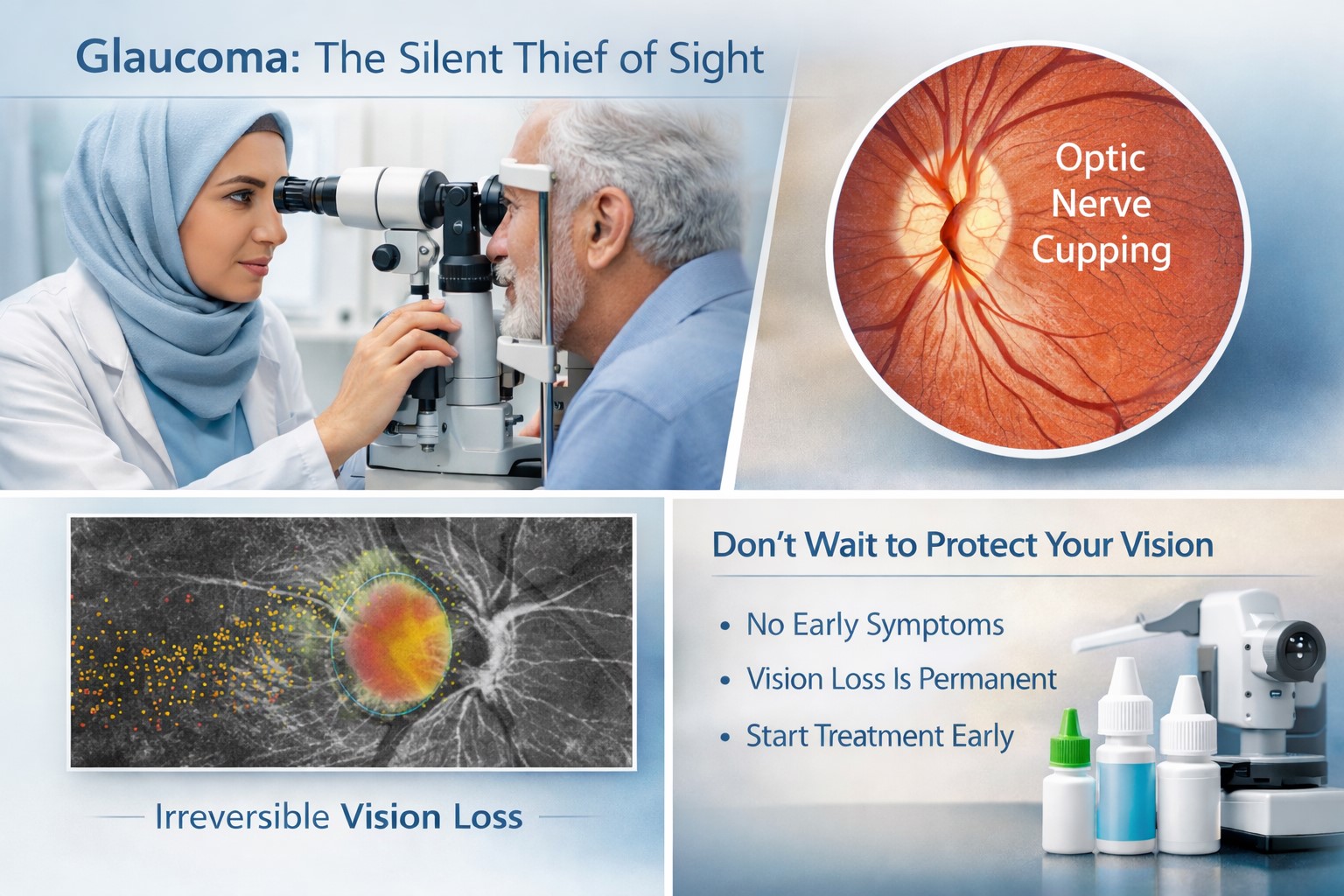
When someone is told they may have glaucoma, one of the most common reactions is confusion:
“Do I really need treatment already?”
Because glaucoma usually causes no pain and no early symptoms, many patients delay treatment, seek multiple opinions, or wait for “clearer proof.”
Unfortunately, this delay can cost something we can never restore — vision.
Understanding Glaucoma: The Silent Threat
Glaucoma is often called the “silent thief of sight.” In most cases — especially primary open‑angle glaucoma — vision loss happens slowly and without warning.
By the time noticeable symptoms appear, significant and permanent damage may already have occurred.
The most important fact to understand:
Glaucoma damage is irreversible.
Once the optic nerve is damaged, we cannot bring back the lost vision.
Treatment does not improve vision — it preserves the vision you still have.
The Dilemma: When Should Treatment Start?
Patients often feel uncertain when they hear statements like:
- “Your eye pressure is high.”
- “Your optic nerve looks suspicious.”
- “Your scan shows early changes.”
Common thoughts include:
- “But my vision is still clear.”
- “Let me wait and repeat the test.”
- “Maybe another doctor will say I don’t need drops.”
While second opinions are reasonable, excessive delay can be dangerous.
Glaucoma diagnosis is based on multiple factors, not just one number:
- Eye pressure (IOP)
- Optic nerve appearance
- OCT scans
- Visual field testing
- Corneal thickness
- Family history
- Age and risk profile
In early glaucoma or high-risk suspects, starting treatment is often a preventive decision — to stop future damage before it occurs.
Why Delaying Treatment Is Risky
1. Damage Is Permanent
Optic nerve fibers do not regenerate. Lost vision cannot be restored.
2. Progression Is Unpredictable
Some patients remain stable for years, while others worsen rapidly.
There is no guaranteed safe waiting period.
3. “Normal” Pressure May Still Be Harmful
Every eye has its own tolerance. A pressure level safe for one person may damage another.
4. Time Lost Cannot Be Recovered
Months spent repeating consultations without treatment may allow silent progression.
5. Early Disease Is the Best Time to Act
Treatment is most effective before major nerve damage occurs.
The Myth of “Let’s Watch and Wait”
Observation is appropriate in selected low-risk cases, but this decision must be made carefully after thorough evaluation by an ophthalmologist.
Problems occur when patients:
- Change doctors frequently
- Repeat tests in multiple centers
- Stop drops without medical advice
- Compare reports from different machines
Different devices may show slightly different readings, which can create confusion or false reassurance.
Consistency in follow-up is more important than repeated testing.
Why Early Treatment Works
The goal of glaucoma treatment is simple:
Reduce eye pressure to a level that is safe for your optic nerve.
This may involve:
- Prescription eye drops
- Laser treatment (such as SLT)
- Surgery in advanced cases
Large international studies have consistently shown that controlling eye pressure slows or prevents vision loss in glaucoma patients.
Starting early gives the best chance of preserving lifelong vision.
Common Patient Concerns About Starting Drops
“Will I need drops forever?”
Glaucoma is usually lifelong. However, treatment may be adjusted over time depending on response.
“Are drops harmful?”
Modern glaucoma medications are generally safe. Side effects are usually mild and manageable.
“Can lifestyle changes replace treatment?”
Healthy habits help overall eye health, but they cannot replace medical therapy for glaucoma.
“My vision is fine — is treatment really necessary?”
Yes. Glaucoma affects peripheral vision first, which patients often don’t notice until late stages.
Can glaucoma be cured?
No, glaucoma cannot be cured, but early treatment can prevent vision loss.
My eye pressure is high but I see clearly. Do I still need treatment?
Yes, glaucoma often damages peripheral vision first without symptoms.
Can glaucoma be cured?
No, glaucoma cannot be cured, but early treatment can prevent vision loss.
My eye pressure is high but I see clearly. Do I still need treatment?
Yes, glaucoma often damages peripheral vision first without symptoms.
Is glaucoma treatment lifelong?
Most patients require long-term monitoring and treatment.
Trust, Not Fear: Making Confident Decisions
It is natural to seek clarity. But decisions should be based on medical evidence, not fear, social media advice, or anecdotal experiences.
Helpful questions to ask your doctor:
- What stage is my glaucoma?
- What is my target eye pressure?
- What is my risk of progression?
- What treatment options do I have?
- How often should I follow up?
Understanding your condition builds confidence and reduces anxiety.
When You Should Definitely Not Delay Treatment
You should start treatment promptly if:
- Optic nerve damage is already visible
- Visual field loss is detected
- Eye pressure is significantly elevated
- You have strong family history of glaucoma
- One eye already has advanced disease
In such situations, delay can lead to permanent functional vision loss.
A Final Message
Glaucoma is a lifelong condition requiring partnership between doctor and patient.
Delaying treatment in search of “certainty” may result in irreversible damage.
If your ophthalmologist advises starting therapy, it is because the risk of vision loss outweighs the inconvenience of treatment.
Your vision is precious. Protect it early — not after it is lost.
If you have been advised glaucoma treatment or have high eye pressure, early evaluation can protect your vision.
Consultation with a glaucoma specialist helps determine your risk and the right treatment plan.
Then add:Dr. Mamta Mittal
Specialist Ophthalmologist