

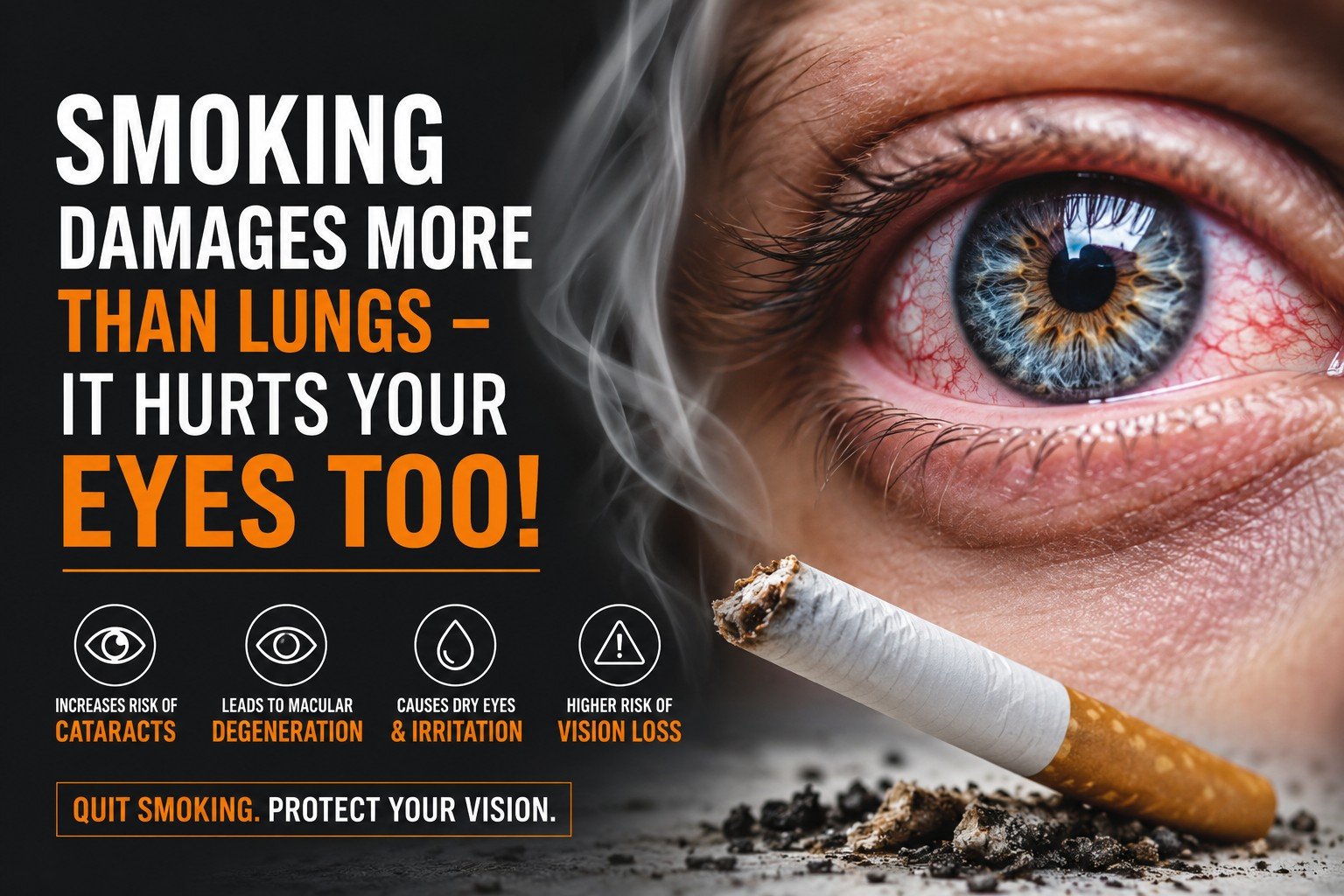
When people think about the dangers of smoking, they usually think of lung disease or heart problems. But very few realize that smoking can seriously damage the eyes and even lead to permanent vision loss. Your eyes are incredibly delicate organs, and tobacco smoke exposes them to harmful chemicals that reduce blood flow, increase inflammation, and accelerate aging inside the eye.
Whether you smoke regularly or occasionally, the impact on your vision can be significant over time.
Smoking and Cataracts
A cataract occurs when the natural lens of the eye becomes cloudy, causing blurred or dim vision. Smokers are much more likely to develop cataracts earlier in life compared to non-smokers. The toxins in cigarette smoke create oxidative stress inside the eye, damaging the proteins that keep the lens clear.
Patients often notice:
- Blurry vision
- Difficulty driving at night
- Increased glare from lights
- Faded colors
While cataract surgery can restore vision, prevention is always better than treatment.
Increased Risk of Macular Degeneration
One of the most serious eye diseases linked to smoking is Age-Related Macular Degeneration (AMD). The macula is the central part of the retina responsible for sharp vision needed for reading, driving, and recognizing faces.
Smokers are several times more likely to develop AMD than non-smokers. In many cases, the damage is irreversible. Smoking reduces oxygen supply to the retina and damages its protective tissues, accelerating degeneration.
Early symptoms may include:
- Distorted vision
- Difficulty reading
- Dark or blurry spots in central vision
AMD can severely affect independence and quality of life.
Dry Eyes and Eye Irritation
Smoking also affects the tear film that keeps the eyes moist and comfortable. Cigarette smoke irritates the surface of the eyes and destabilizes natural tears, leading to Dry Eye Syndrome.
Common symptoms include:
- Burning sensation
- Redness
- Watering
- Grittiness
- Eye fatigue
Even passive smoking can trigger irritation, especially in children and contact lens users.
Diabetes, Smoking, and Vision Loss
For people with diabetes, smoking is particularly dangerous. It worsens blood vessel damage throughout the body, including the retina. This increases the risk of Diabetic Retinopathy, a condition that can cause bleeding, retinal swelling, and vision loss.
Smoking combined with diabetes creates a much higher risk of serious eye complications.
Smoking During Pregnancy
Smoking during pregnancy can also affect a baby’s eye development and increase the risk of premature birth-related eye diseases. Children exposed to secondhand smoke may have a greater chance of developing eye irritation and infections.
The Good News: Quitting Helps
The eyes have an amazing ability to recover when smoking stops. Quitting smoking improves blood circulation, reduces inflammation, and lowers the risk of future vision problems. The earlier you quit, the better the chances of protecting your eyesight.
Simple steps to protect your vision include:
- Stop smoking
- Avoid secondhand smoke
- Wear UV-protective sunglasses
- Maintain a healthy diet rich in antioxidants
- Schedule regular comprehensive eye examinations
Final Thoughts
Vision loss from smoking often develops slowly and silently. By the time symptoms appear, some damage may already be permanent. Protecting your eyes is yet another powerful reason to quit smoking and choose a healthier lifestyle.
Your eyesight is precious — and unlike a smartphone screen, it cannot simply be replaced with an upgrade