
Most people visit an ophthalmologist only when their vision becomes blurry or when they need new glasses. But a comprehensive eye examination is far more powerful than most people realize. In fact, a routine eye check can help detect hidden health problems affecting the entire body, often before symptoms begin.
At an ophthalmology clinic, an eye check is not limited to an optical exam. It includes a detailed medical evaluation of the eye structures that are closely linked to your brain, blood vessels, and nervous system.
Eye Checkups Go Beyond Glasses Testing
While vision testing is important, it is only one part of a complete eye examination. A thorough eye check includes:
- Measurement of eye pressure
- Evaluation of the optic nerve
- Detailed fundus examination of the retina and blood vessels
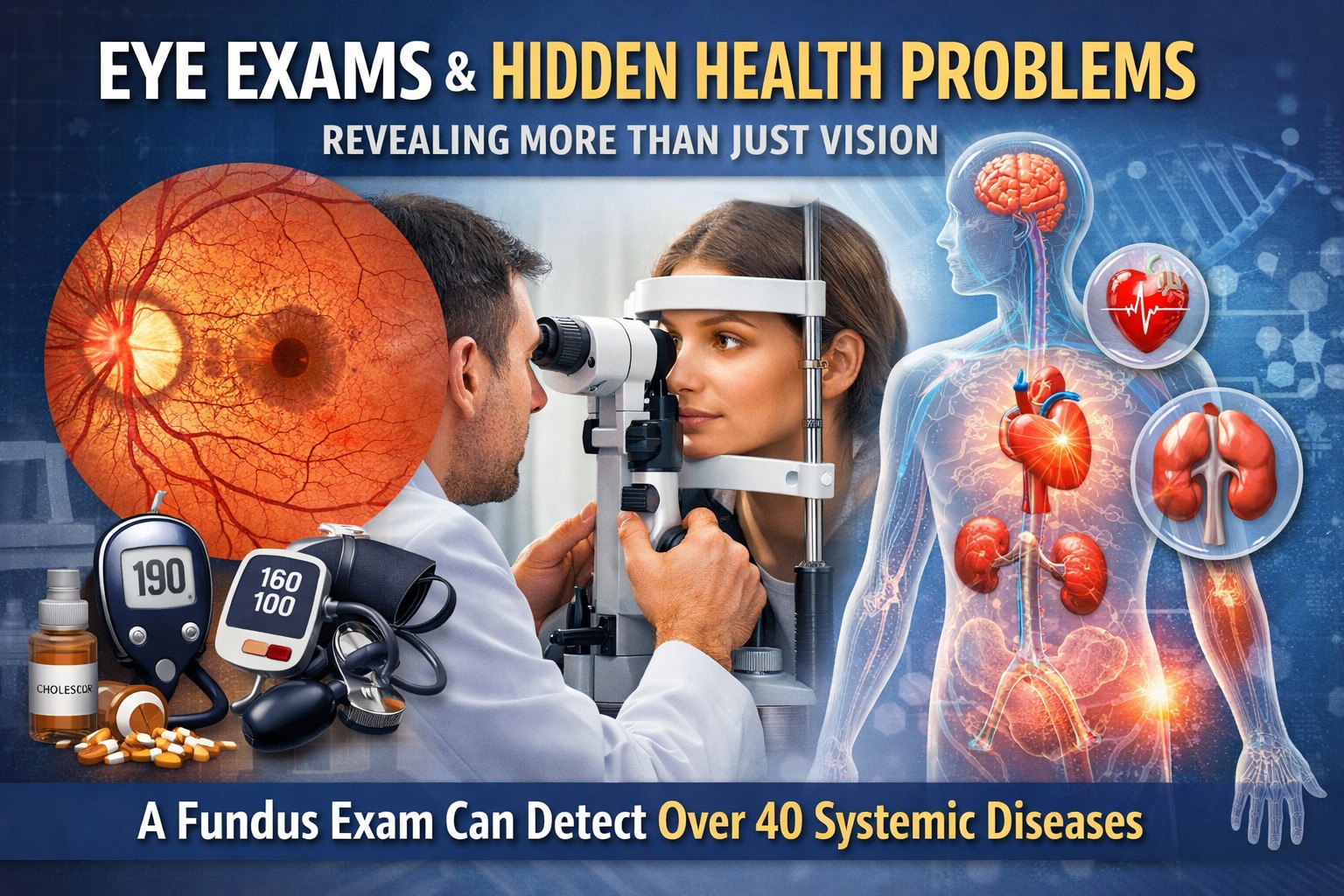
The fundus exam is especially important because it allows doctors to directly observe blood vessels and nerves — something not possible anywhere else in the body without surgery.
Fundus Examination Can Reveal Over 40 Systemic Diseases
Medical studies show that fundus examination can help identify signs of more than 40 systemic conditions. This makes regular eye checkups a vital part of preventive healthcare.
Some common conditions detected during fundus examination include:
- Diabetes: Retinal changes may appear even before diabetes is diagnosed
- High Blood Pressure: Retinal vessel narrowing or bleeding may indicate uncontrolled hypertension
- High Cholesterol & Heart Disease: Changes in retinal circulation reflect cardiovascular risk
- Brain Tumors & Neurological Disorders: Optic nerve swelling may signal increased brain pressure
- Kidney Disease: Retinal findings often parallel kidney damage
- Autoimmune Diseases: Lupus, vasculitis, and inflammatory disorders may first affect the eyes
- Blood Disorders & Infections: Anemia, leukemia, tuberculosis, and other systemic illnesses can show retinal signs
Many patients feel completely normal — yet their eyes quietly reveal early warning signs.
Glaucoma Detection: Saving Vision Before It’s Lost
Glaucoma is known as the silent thief of sight because it causes irreversible vision damage without early symptoms. Regular eye exams at an ophthalmology clinic help detect glaucoma early through eye pressure testing and optic nerve evaluation.
Why Regular Eye Exams Are Important — Even Without Vision Complaints
Clear vision does not always mean healthy eyes. Many systemic diseases remain silent in their early stages. A routine eye examination can act as an early detection tool, enabling timely referral and treatment before serious complications develop.
How Often Should You Get an Eye Check?
- Adults: Every 1–2 years
- After age 40 or with diabetes/hypertension: Once a year
- Children: Regular eye exams for healthy visual and neurological development
Final Takeaway
An eye examination is not just about eyesight — it’s about overall health. A simple fundus examination can provide clues to over 40 systemic diseases, making regular eye checkups an essential part of preventive medical care.
At an ophthalmologist’s clinic, your eyes don’t just help you see better — they help protect your long-term health.
👁️ See clearly. Detect early. Live healthier.