
If you’ve been wearing thick glasses since childhood and your prescription feels like it’s in a long-term relationship with “-10 and beyond,” you’re probably dreaming of life without lenses. But here’s the tea: very high myopes aren’t always safe candidates for traditional refractive surgeries like LASIK or SMILE. And that’s totally okay — because newer, safer, and smarter options exist.
Let’s break it down in a simple, patient-friendly way.
Why High Myopes May Not Qualify for LASIK or SMILE
For people with very high myopia (usually above –8.00 to –10.00), procedures that reshape the cornea have limitations.
The cornea can only be thinned to a safe level. When too much tissue needs to be removed, risks rise — including corneal instability, dry eyes, or ectasia later in life.
Also, extreme myopia often comes with longer eyeballs (literally!), making retinal risks higher. Any surgery has to respect that.
But being a “no” for LASIK doesn’t mean you’re a “no” for vision freedom.
What Are the Best Options for Very High Myopia?
⭐ 1. Implantable Collamer Lens (ICL) — The Rockstar Option
If LASIK is a no-go, ICL is usually the hero of the story.
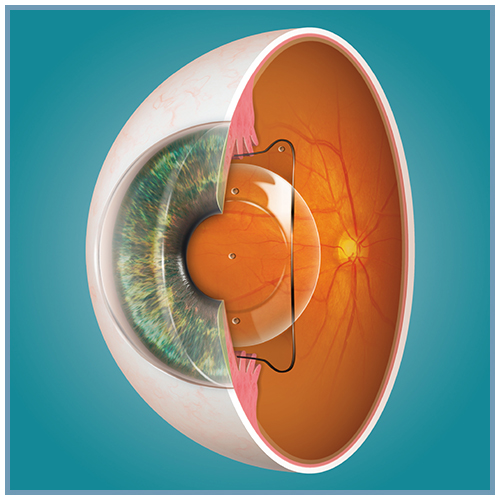
An ICL is a soft, flexible lens placed inside the eye — like a permanent contact lens you never feel.
Benefits:
- Corrects very high powers (up to –20.00 depending on case)
- Reversible — the lens can be removed or replaced
- Doesn’t thin the cornea
- Clear vision even for extreme prescriptions
- Great for patients with dry eyes or thin corneas
Cons:
- Involves entering the eye (minor surgery)
- Slightly longer recovery than LASIK
- More expensive
ICL is like upgrading to VIP vision without touching the cornea.
⭐ 2. Clear Lens Exchange (CLE) — Vision Correction + Future-Proofing
CLE, also called refractive lens exchange, is basically cataract surgery before a cataract forms.
Your natural lens is removed and replaced with a customised intraocular lens (IOL).
Benefits:
- Permanent correction
- Works perfectly for very high myopia
- No future cataract worries
- Premium IOLs can correct astigmatism and offer multifocality
Cons:
- Irreversible
- Slightly higher retinal risk in very high myopes (needs evaluation)
- Requires surgical downtime
This is usually chosen for patients over 40, especially when early presbyopia or lens changes have already begun.
⭐ 3. Contact Lens Optimisation (Modern & Comfortable)
If surgery is not suitable or not preferred, advanced contact lenses work wonders.
Options include:
- High-power soft lenses
- Rigid Gas Permeable (RGP) lenses
- Scleral lenses for extreme powers or irregular corneas
Scleral lenses especially give HD-like vision for powers that glasses struggle with.
⭐ 4. Customized Glasses for Extreme Powers
Not the dream, I know — but today’s high-index lenses, aspheric designs, and lightweight frames make glasses far more comfortable and cosmetically appealing than before.
Final Thoughts
If you’re a very high myope and your laser eligibility test comes back as a “no,” don’t panic — seriously.
You have safe, effective, and long-term alternatives. ICL and CLE have transformed vision for thousands who once had no options.
A quick comprehensive eye assessment will help identify your safest route to spectacle independence — because even if LASIK isn’t right for you, clearer vision definitely can be.