

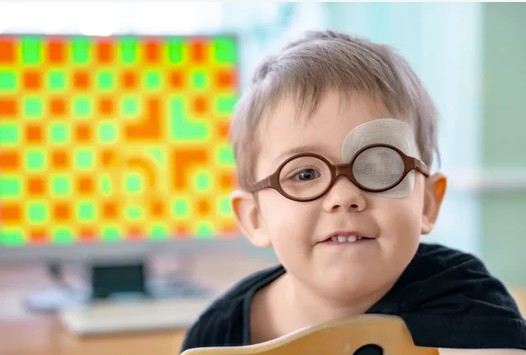
If you grew up thinking amblyopia treatment = patching and a whole lot of negotiation with a cranky kid… surprise! 2025 has entered the chat, and we now have smarter, cooler, and way more effective options for boosting vision during childhood.
Amblyopia develops when the brain starts favouring one eye over the other because the weaker eye isn’t sending a clear image. Over time, the brain “dims” that eye’s connection, so early detection becomes super important.
Let’s break it down.
1. Traditional Patching (But Better Than Before!)
Yup, patches are still here — classic never dies.
But now we use smarter schedules, softer materials, and improved monitoring techniques so we don’t overdo or underdo it.
When it works best:
Kids under 8, especially when lazy eye is due to unequal refractive error.
Parent win:
Shorter patching hours + better comfort = fewer battles.
2. Atropine Eye Drops — The Patch-Free Alternative
Think of this as the chill cousin of patching.
Atropine drops blur the stronger eye, encouraging the weaker one to work harder — without needing to wear a patch.
Why parents love it:
• No patch drama
• Just once-a-day dosing
• As effective as patching for many kids
3. Updated Eyeglass Options
Today’s glasses for amblyopia do WAY more than correct prescription.
We now prescribe specialized lenses, including:
- Bangerter filters
- Anti-suppression lenses
- High-precision digital lenses
These subtly train the brain without drawing attention — perfect for kids who avoid patches.
4. Vision Therapy & Digital Eye Training
This is where it gets cool. Vision therapy uses games, exercises, and coordinated activities to strengthen the weaker eye and retrain the brain.
What’s new in 2025:
• Interactive digital exercises
• Remote monitoring
• VR-assisted activities
• Reward-based gamified programs
Kids feel like they’re leveling up in a game… but it’s their vision getting the upgrade.
5. VR-Based Binocular Therapy (The Future Is Here)
Modern research has proven that treating both eyes together — instead of forcing the brain to rely only on the weak one — leads to better, faster results.
VR and iPad-based programs use contrast-balanced images so both eyes must team up.
Benefits:
• Stronger brain activation
• More engaging for kids
• Faster improvement
• Helpful even for older children and teens
6. AI-Guided Amblyopia Plans
Some clinics now use AI tools to:
- Track progress daily
- Adjust therapy intensity
- Personalize patching or drop schedules
- Predict which treatments will work best
Basically, it’s like having a smart vision coach in your pocket.
So… What Should Parents Do?
✔ Book an early eye exam — ideally by age 3
✔ Stick to the treatment plan consistently
✔ Combine approaches for best results
✔ Ask your doctor about VR therapy, digital programs, and AI-based tracking
Final Takeaway
Amblyopia treatment has officially entered its glow-up era — less stress, more science, and therapies kids actually enjoy. With options ranging from updated patching to VR and AI-guided programs, your child has every chance to build strong, healthy vision for life.